Login required for search functionality | Get a free-level account with Google/Microsoft single-sign-on.
21 reports
Cyber Risks Brief - October 15, 2026
Phishing scams are impersonating government agencies and popular AI tools. The use of AI as a tool for cyber attacks has increased. Vulnerability of cold storage facilities threaten food and medical supply chains. And essential updates to enterprise tools.
Cyber Risks Brief - October 1, 2026
North Korean hackers stole USD 388M from Bitget. ShinyHunters compromised the cybercrime leak site, risking secondary extortion. Ad-blocker browser extension exposed as spyware. Apple patched 260+ flaws, while a critical Cisco SD-WAN zero-day faces active exploitation.
Cyber Risks Brief - September 17, 2026
In Central Asia hundreds of fake government websites are uncovered. Over 220 million travel records exposed from Vietnam's travel database. VPN flaw compromises government personnel records of Japan. And critical security updates for Microsoft and Apple users
Cyber Risks Brief - September 3, 2026
This brief covers cyber espionage operations targeting Philippines and Myanmar government data. Compromised WiFi routers with pre-programed backdoors. Developments in AI generated disinformation campaigns. And, analysis on recent cyberattacks targeting healthcare companies.
Cyber Risks Brief - August 20, 2026
This brief covers threat actors exploiting remote access vulnerabilities from hidden back to access cameras of military drones to the disruption of critical infrastructure across continents. We also tackle how North Korea exploits remote work; and urgent security updates for consumer technology.
Cyber Risks Brief - August 6, 2026
PSA Intelligence notes rising cyber espionage on APAC government databases and critical infrastructure attacks. Concurrently, AI models are escaping sandboxes to breach systems, and AI-generated phantom threats in CVE databases are wasting security teams' resources.
Cyber Risks Brief - July 23, 2026
Regional cyber espionage, new data classification policies, artificial intelligence threats, and severe software vulnerabilities require immediate risk mitigation and security compliance
Cyber Risks Brief - July 9, 2026
Asia-Pacific enterprises face escalating risks from financially motivated cybercrime, state-sponsored espionage targeting critical infrastructure, and advanced software supply chain attacks, alongside emerging threats like automated artificial intelligence ransomware operations.
Cyber Risks Brief - June 25, 2026
Cyber crime surges across the Asia Pacific region as the Philippines becomes a focal point for fraudulent operations. Enterprises face severe threats from complex supply chain attacks, massive credential leaks, and critical software vulnerabilities requiring immediate remediation.
Cyber Risks Brief - June 11, 2026
Global cyber threats are escalating as state-sponsored espionage, ransomware campaigns, and website defacement target critical infrastructure and government entities worldwide. To mitigate these digital risks, organizations are advised to patch critical software flaws immediately.
Cyber Risks Brief - May 28, 2026
Recent reports highlight critical vulnerabilities across enterprise platforms and severe supply chain attacks. Malicious groups continue to target telecommunications companies and exploit weaknesses, requiring immediate security updates.
Cyber Risks Brief - May 14, 2026
China-linked espionage targets Philippine infrastructure while AI-generated scams and illegal text blasters exploit local trust. Meanwhile, the Instructure breach exposed data of thousands of institutions, and cascading supply chain attacks continue to compromise major security and software vendors.
Cyber Risks Brief - April 30, 2026
Recent incidents expose severe risks to Philippine companies from state-backed hacking groups, unverified government data breaches, and compromised third-party software. Organizations are advised to track software vulnerabilities and secure cloud configurations to prevent massive data theft.
Cyber Risks Brief - April 16, 2026
Cyber threats in the Philippines are shifting toward human-centric manipulation. Organized syndicates now use sophisticated social engineering, such as impersonating government officials and hijacking technical platforms like Axios, to bypass automated security and compromise enterprises.
Cyber Risks Brief - April 1, 2026
Recent supply chain attacks on widely used development tools and severe network equipment vulnerabilities demand immediate patching. Additionally, Philippine enterprises are advised to maintain strict vigilance against persistent, state sponsored cyber espionage and data harvesting operations.
Cyber Risks Brief - March 19, 2026
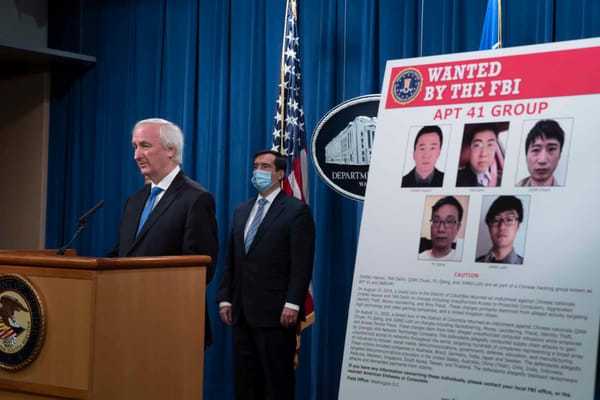
Philippine authorities are intensifying crackdowns on illegal gambling and regional scam hubs, while Meta has disabled 150,000 fraudulent accounts. Concurrently, enterprises face rising threats from APT41 espionage, sophisticated VPN phishing, and critical vulnerabilities in Microsoft and Veeam.
Cyber Risks Brief - March 5, 2026
The Philippine government has shifted to monitoring Telegram, while the BSP proposes annual cyber self-assessments for banks. Regionally, the FBI is targeting industrialized scam hubs. Meanwhile, threat actors are weaponizing AI tools and malicious web apps to bypass enterprise defenses.
Cyber Risks Brief - February 19, 2026
Singapore’s major telcos were targeted in a months-long espionage campaign by Chinese-linked UNC3886. Locally, phishing sites surged 423%, while state-sponsored actors are weaponizing Gemini AI to accelerate attacks. Critical flaws in Honeywell CCTVs and Windows further expand the regional risk.
Cyber Risks Brief - February 5, 2026
Multiple ransomware groups, including Qilin and Tengu, have allegedly targeted Philippine firms like PSBank and Lenotech. Concurrently, China-linked HoneyMyte and PeckBirdy campaigns are intensifying regional espionage, while critical vulnerabilities in n8n and Microsoft Office pose risks.
Cyber Risks Brief - January 22, 2026
The AFP is undergoing joint cyber training with Canada, while the Philippines lifted its ban on Grok AI following new safeguards. High-severity zero-days in Cisco and n8n (CVSS 10.0) demand immediate patching, as threat actors weaponize malicious browser extensions and "Reprompt" flaws.
Cyber Risks Brief - January 9, 2026
Taiwan’s energy sector is facing 2.63 million daily intrusion attempts from Chinese-linked groups like APT41. Meanwhile, a "KimWolf" botnet has compromised 2 million Android devices, and new "ClickFix" scams use fake blue screens to trick users into manually executing malicious code.