Authorities Observed “Generally Peaceful” Labor Day Demonstrations in the Philippines Amidst Minor Altercations With Protesters in Manila
Labor Day protests drew relatively larger crowds this year as protesters called for higher wages and better government support. Isolated altercations between demonstrators and police in Manila caused minor injuries among police personnel.
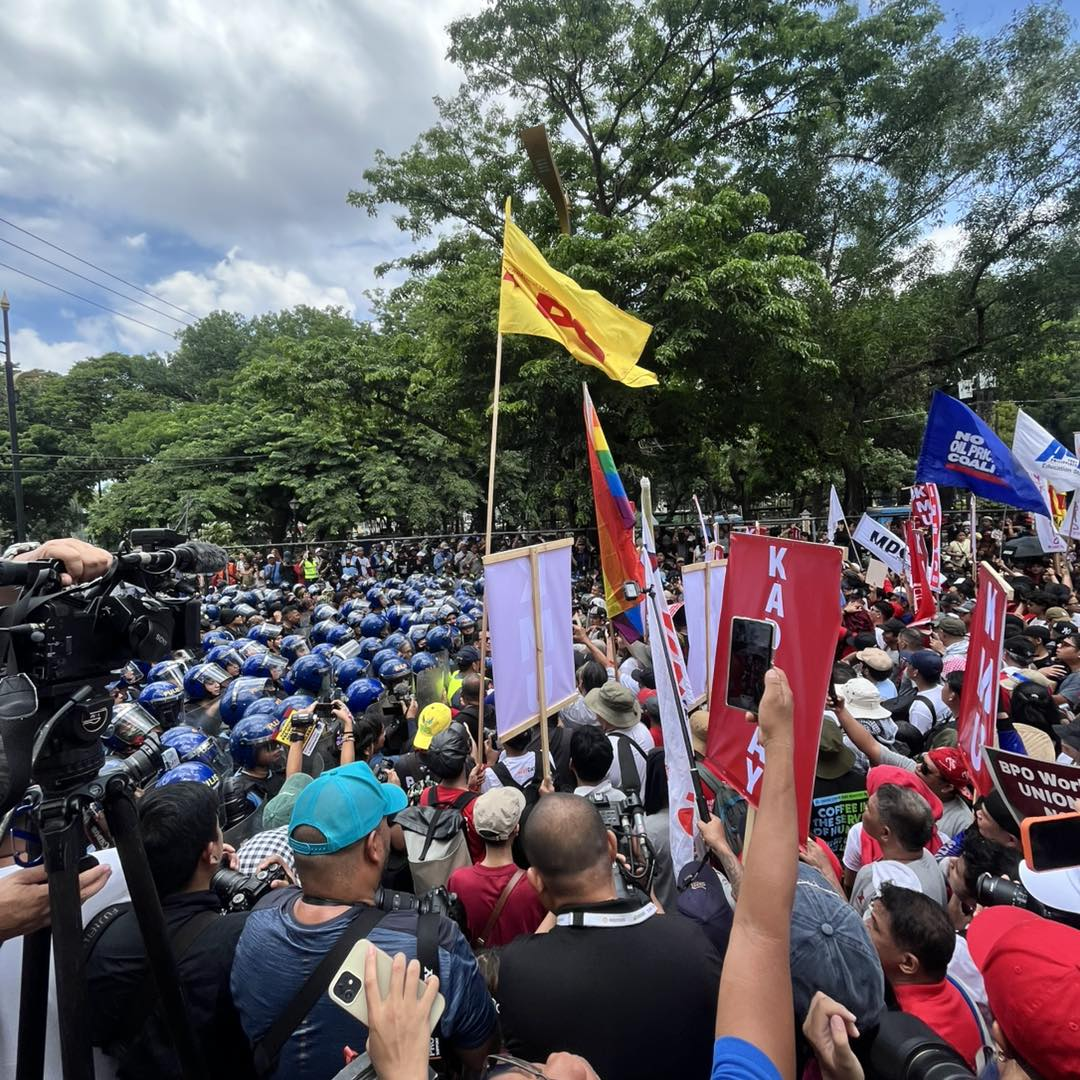
Labor Day commemorations in the Philippines were “generally peaceful” according to local authorities, despite reports of minor altercations between protesters and riot police in the City of Manila. PSA Intelligence notes that low-level violence between protesters and responding authorities is not uncommon during large protests in the Philippines, but this rarely devolves into widespread civil unrest beyond what is manageable for police personnel.
Labor groups staged protests across the country on May 1, with the largest congregations concentrated in Metro Manila and led by traditional labor groups Kilusang Mayo Uno and Nagkaisa Labor Coalition. A newly formed coalition called Laban Manggagawa, affiliated with transport union Manibela, also participated in the protests. Organized programs took place at Welcome Rotonda in Quezon City and on Mendiola Street and Kalaw Avenue in the City of Manila, with protesters occupying most of España Boulevard during their march.
PSA Intelligence Security Analyst Team Inside
The PSA Intelligence team of security and risk analysts monitor thousands of intelligence sources across the Philippines and broader APAC region daily. PSA Intelligence supplies well-known international corporate security operations centers and enterprise risk management teams the reports and data required for their operations.
Contact us to for access to our regular risk management reports and data-feeds. Be sure to talk to us about our analyst vetted, reliable data feeds for your AI driven risk management systems too. We have 20+ years of back-data and keep the data acquisition pipelines running so you don't have to.
PSA Intelligence: Regional Reporting Capabilities
Our fast-paced intelligence pipeline is driven by a dedicated team of Manila-based security analysts that monitor the Philippine landscape every day. We bring together on-the-ground local insight with large scale data monitoring and cut through the noise to deliver the concise, actionable intelligence that our clients rely on to navigate their risks.
Regular Briefs & Industry Monitors
We provide a weekly digest of key political, economic, and security developments and analysis of their short and long-term impact on the local and regional business environment. Our Industry Monitors deliver regular summaries of key developments in manufacturing, energy, mining, and tourism.
Our Cyber Risks Briefs detail emerging cyberthreats, digital security vulnerabilities, and regulatory shifts, while our Economic Briefs provide macroeconomic snapshots covering inflation, trade markers, and fiscal policy. We also publish Health Risks Briefs tracking local disease statistics and healthcare capacities.
Targeted Crime & Kidnapping Reports
Our teams produce continuous updates and analysis on developing crime and safety trends targeting corporates and staff, ranging from opportunistic petty crime to syndicated criminal activity. This includes deep dives on known modus operandi, suspect profiles, and sociopolitical environments.
Additionally, we monitor Kidnapping Related Incidents in the Philippines, tracking publicly-known abduction cases, motives, victim profiles, and the broader regional developments that influence these threat vectors.
Insurgency, Terrorism, and Civil Unrest
We conduct ongoing analysis of activities of Communist insurgents in the Philippines, including their estimated operational capabilities, regional hotspots, and the progress of government peace processes.
Our coverage extends to Islamist Insurgency and Terrorism in Mindanao, assessing activities not limited to terrorism-related motivations but also criminal, personal, and cultural factors. We provide continuous assessments of political stability, strikes, protests, and broader civil unrest dynamics affecting operational continuity.

Ask an Analyst
Do you have a question regarding this report that you would like to ask our team of security and risk analysts? Ask here.
Query Sent
Thank you. Our intelligence team will respond to your query shortly.